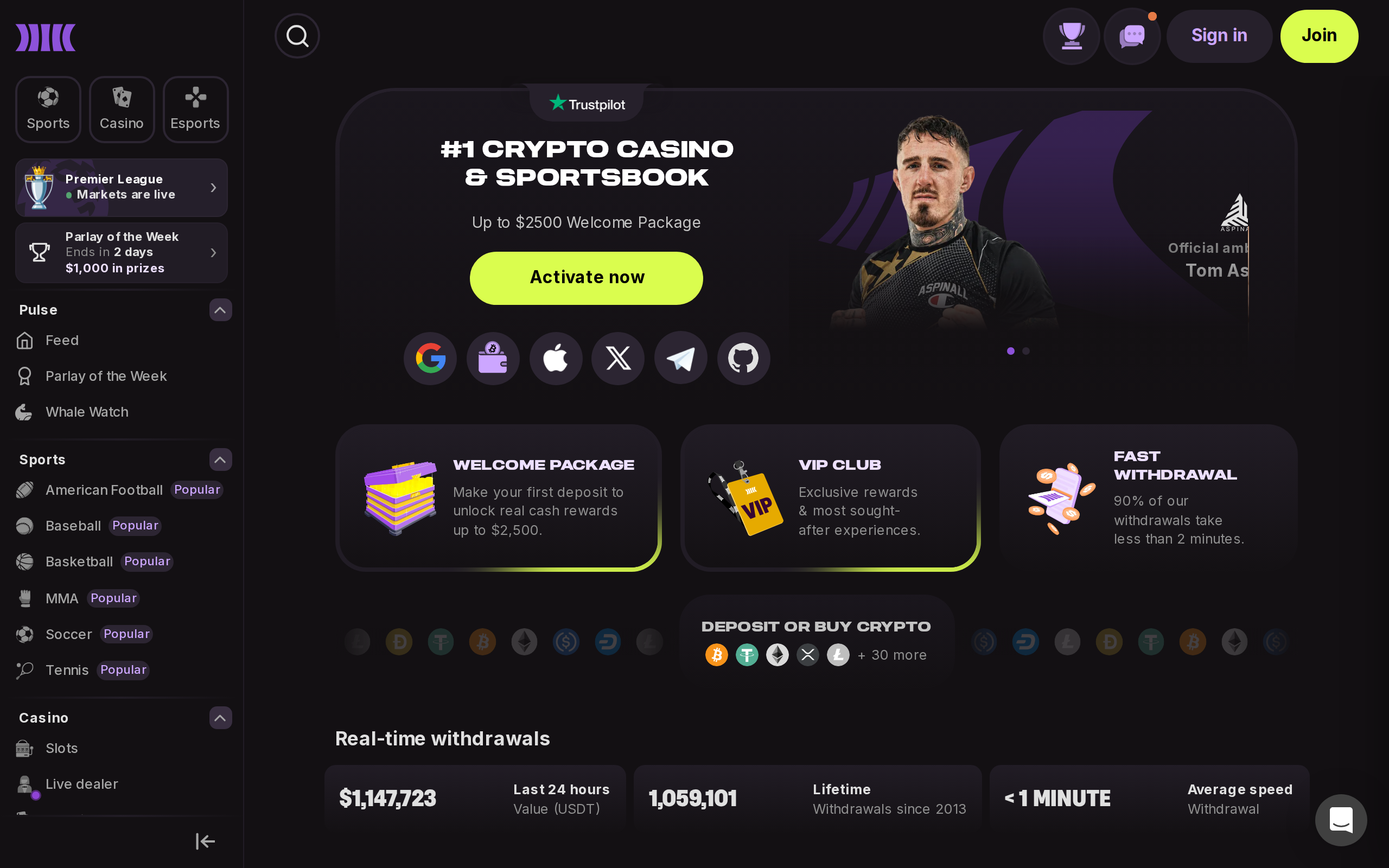
Rollbit is an offshore crypto casino, and you can lose everything you put in. It is blocked in the United States and, on its main site, in Great Britain. Treat it as paid entertainment with a high chance of loss, never as a way to earn, and only ever stake an amount you could lose without a second thought.
One account, three kinds of risk
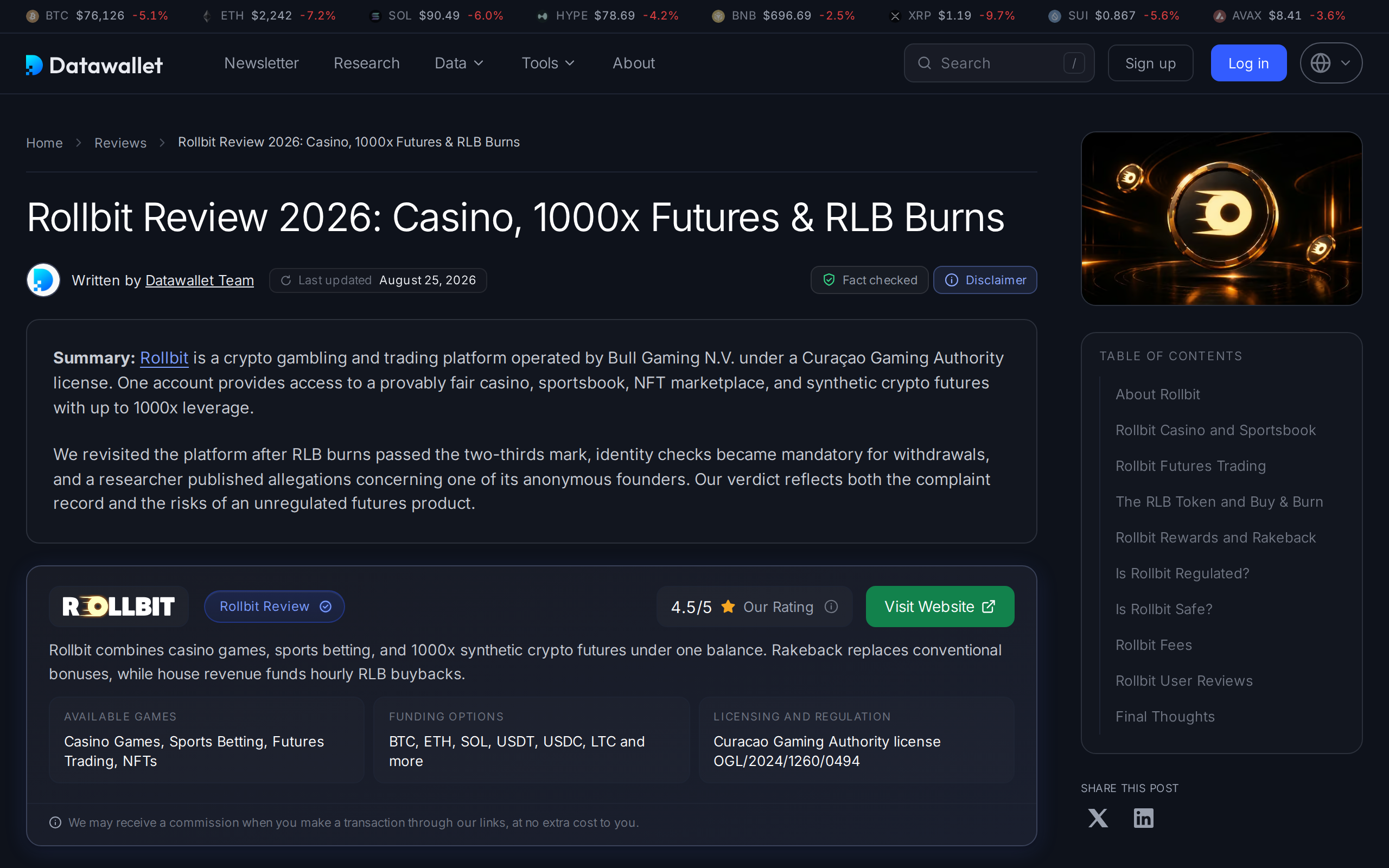
Most casinos give you one risk: the games. Rollbit gives you three. The same login opens a casino, a sportsbook and a futures desk, and it is tied to a token that the operator buys back and burns. The question we were asked is whether that blend is worth the extra risk. We did not deposit for this review. We read Datawallet's long review, a CoinDesk report, token data and complaints coverage. Every number below is attributed.
What the licence covers, and what it does not
Rollbit is run by Bull Gaming N.V. under a Curaçao Gaming Authority licence, numbered OGL/2024/1260/0494 on Datawallet's page. Datawallet notes the licence covers games of chance and does not cover leveraged crypto trading. That matters because the futures desk offers up to 1000x leverage across more than 60 markets. A 1000x position is wiped out by a price move of a tenth of one percent.
The licence history has been shaky. In March 2023 CoinDesk reported that the RLB token fell 20% amid licensing concerns, with the firm saying Curaçao authorities were carrying out an annual licence review.
The RLB token: a burn is not a promise
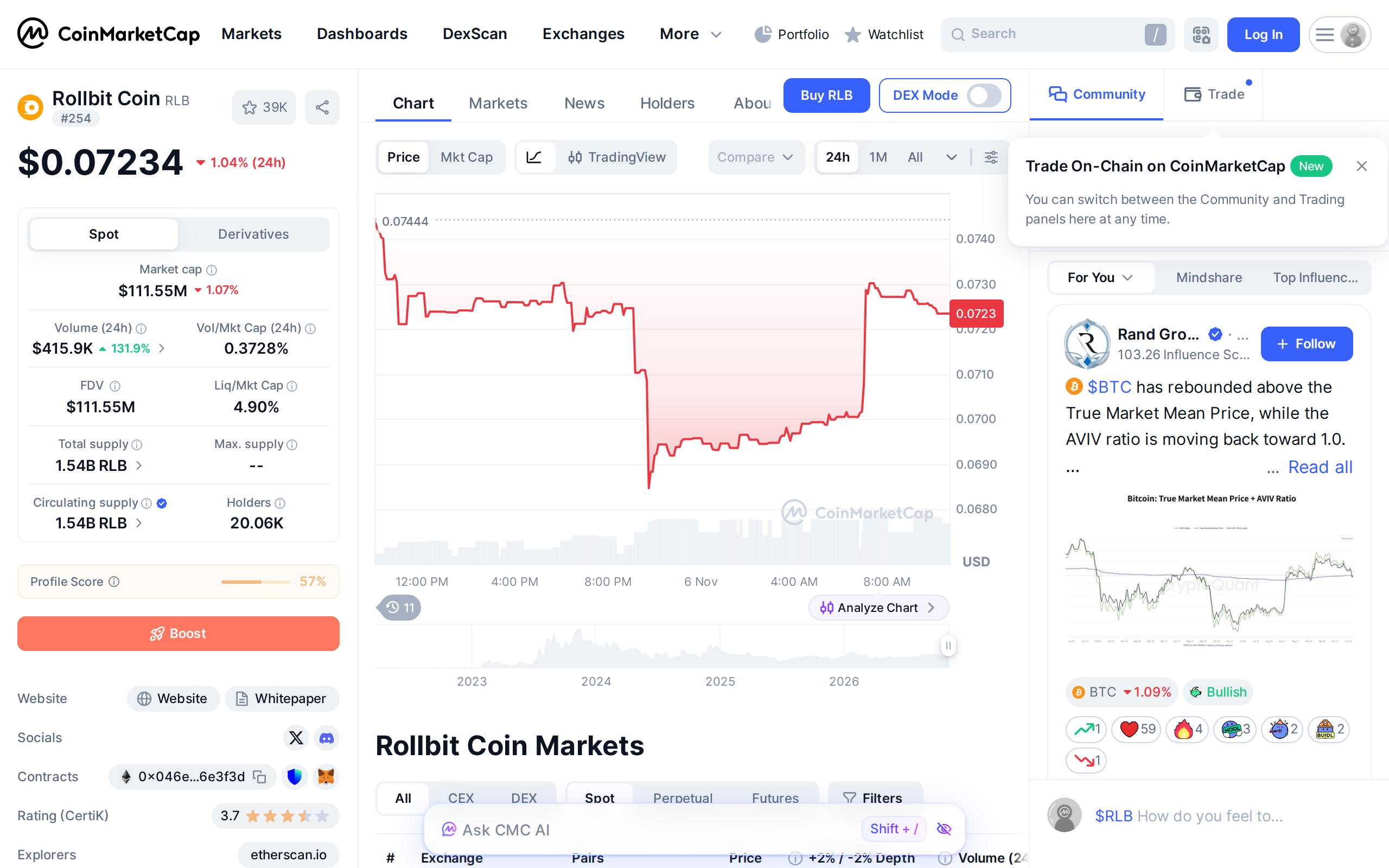
RLB began as a lottery asset and is now a buy-and-burn token. Datawallet says buybacks are funded 10% from the casino, 20% from the sportsbook and 30% from futures, with 90% of each destroyed and 10% going to Rollbot stakers. By August 2026 supply had fallen below 1.6 billion from an original 5 billion.
Burning shrinks supply. It does not guarantee price. Datawallet puts RLB near $0.06, more than 75% below its late-2023 peak, and CoinMarketCap lists it outside the top 250 coins. Holding RLB gives no equity in the company.